The Gibraltar Strait Jacket
Updated: Oct 17, 2020

If you can't differentiate between the Moorish splendour of Andalucia (Almeria to the East, and Costa de Luz to the West) and the distinctly Andalucian detail of Northern Morocco, you would certainly not be to blame. They represent a festival of architectural juxtaposition - harmony, colonial and religious conflict, possession and unity.
You should be able to tell the difference however, between these two boats...
The first evokes an exciting journey; a bucket-list tick - traversing between cosmopolitan Europe and majestic Africa - a moving bridge connecting two mighty continents. Highly instagrammable, and adventure to be lauded. Whether a whistle-stop day trip to break up beach reading and tapas filled evenings, or a momentous segment of a longer trip - it takes around 45 minutes. Just long enough to glance left at the statue of Jesus bidding you 'bon voyage', as Tangiers, the gateway to Morocco and Africa looms. A flick and stamp of the passport. A selfie to celebrate arrival in the largest continent of the Global South.
The second vessel, an overcrowded dinghy known as a 'patera'. The paths of the two vessels take various routes, but cross the same 14km stretch, their passengers carrying similar intentions borne of very different life circumstances: to undertake a life changing experience, to absorb culture and lifestyle, to benefit from something intangible that a new destination based upon perceptions of a long imagined trajectory has to offer. This trajectory is physically short, but ideologically endless. For those on the first vessel, a desire to see the world, to be well travelled, to be a visible force for adventure; for those on the second vessel, a desire to resettle, create a prosperous life, to live within the comfortable folds of the so-called 'free world'.
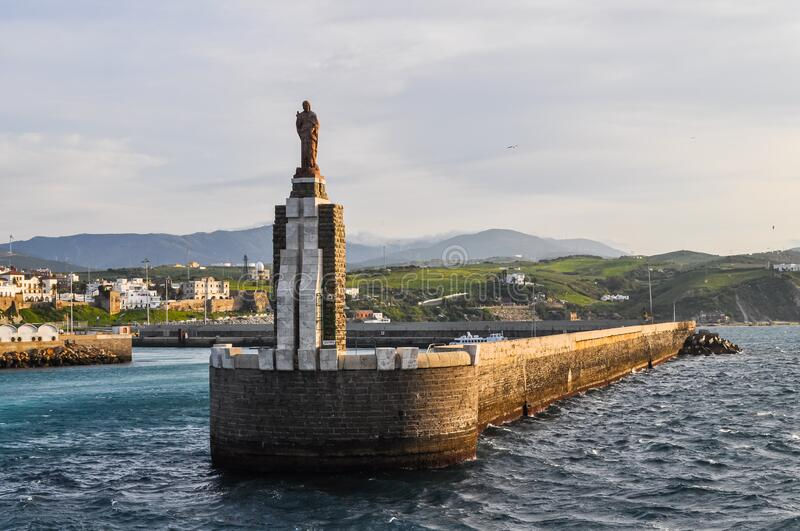
Jesus is not so welcoming it seems to the travellers on the second boat despite the musings of Corinthians 3: 17 " Now the Lord is the spirit, and where the spirit of the Lord is, there is freedom". There is no caveat or addendum to this quote - 'only if you have the right paperwork' or 'if your nationality is not down; you're not coming in'.
My incredibly well established imposter syndrome consistently pipes up to ask why should I be travelling on that first boat, why I deserve to be irritated by the length of the passport queue and maybe miss a playful dolphin whilst I wait for my stamp, when my partner - my daughter's father, and family including my daughter's cousins who are of similar age, would, without having earned the 'worth' of the visa, have to take the second vessel and risk their lives to enter Europe.
How is political global spin so powerful that my family are an unwanted nuisance on European soil ?
How does the notion of human rights masquerade as a semantic cousin to equality when these nautical symbols of a similar journey - both physical and internal, exist in such asymmetrical parallel?
I will not attempt to answer these questions. The rhetorical expands the mind, making us think broadly and outside the comfort zone. Just like travel.


Comments